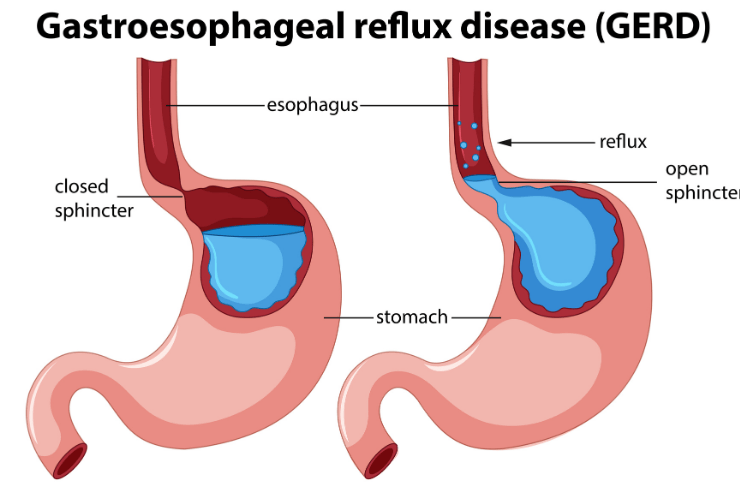
1. What Is GERD (Acid Reflux Disease)?
If you often feel a burning sensation in your chest after eating or an unpleasant taste in your mouth when lying down, it could be more than simple acidity. Gastroesophageal Reflux Disease (GERD) occurs when stomach acid repeatedly backs up into the esophagus, irritating its lining and leading to chronic discomfort. With the right diagnosis and some lifestyle adjustments, GERD can be effectively managed and its effects reduced over time.
2. Common Symptoms You Shouldn’t Ignore
- Heartburn – A persistent burning or tight feeling in the chest, often after meals or when lying down.
- Regurgitation – Sour or bitter fluid backing up into the mouth.
- Chest Pain – Can resemble cardiac pain, so evaluation is essential.
- Chronic Cough or Sore Throat – Caused by acid reaching the throat.
- Difficulty Swallowing – Feeling of food getting stuck in the throat.
- Nausea, Bloating, or Hoarseness – Especially noticeable after heavy or spicy meals.
Frequent use of antacids or recurring post-meal discomfort is a sign to consult a qualified gastroenterologist in Vizag for a proper evaluation.
3. Why GERD Happens — Common Causes in Vizag
GERD often develops due to everyday habits and food preferences. In Vizag, where spicy and fried foods are common, certain patterns increase the risk of reflux.
- Spicy, oily, or fried foods – Common in local cuisine and may weaken the stomach valve.
- Late-night or irregular meals – Lying down soon after eating promotes reflux.
- Stress and hectic schedules – Increase stomach acid and slow digestion.
- Excess weight – Adds pressure on the stomach, leading to acid backup.
- Smoking and alcohol – Relax the muscle that prevents acid reflux.
Adopting simple changes—smaller meals, earlier dinners, and stress management—can greatly reduce GERD symptoms.
4. Effective Diagnosis and Treatment for GERD in Vizag
A GERD specialist in Vizag can determine the exact cause and recommend treatment tailored to your needs. Accurate diagnosis is the first step toward lasting relief.
- Endoscopy – Examines the esophagus for inflammation or damage.
- pH Monitoring – Measures the frequency of acid reflux episodes.
- Manometry – Evaluates muscle movement in the esophagus.
Treatment may include a combination of:
- Lifestyle Modifications – Adjusting meal timings, portion sizes, and sleep posture.
- Medications – Antacids, H2 blockers, or proton pump inhibitors to control acid levels.
- Minimally Invasive Procedures – In severe cases, options like fundoplication to strengthen the stomach valve.