
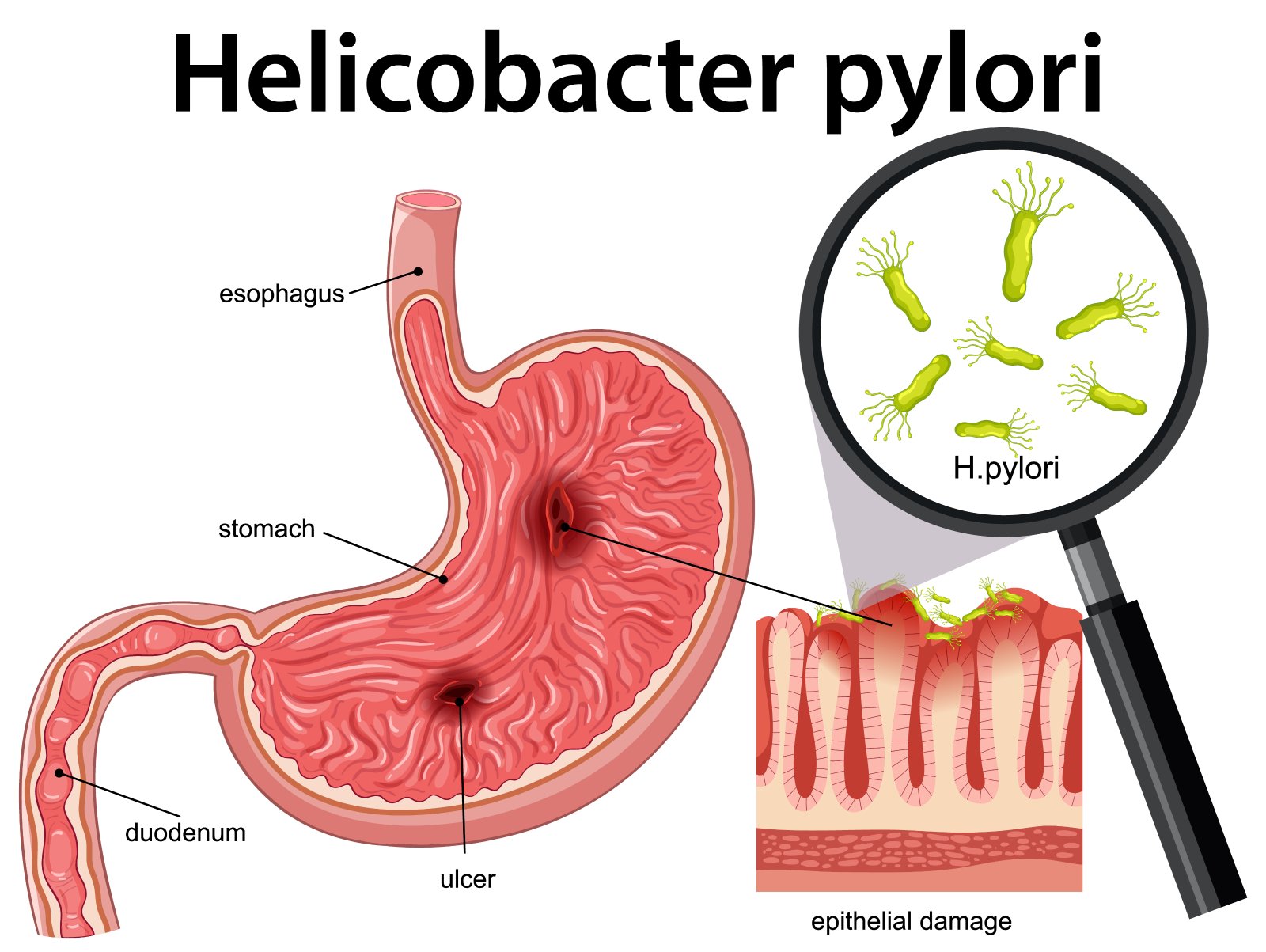
What is Helicobacter pylori?
Helicobacter pylori is a type of bacteria that lives in the stomach. In fact, it is one of the most common causes of stomach ulcers. Many people have this bacteria and do not know it. However, it can lead to problems if left untreated. According to the World Health Organization (WHO), over half of the world’s population may have H. pylori. Yet, not everyone will develop symptoms or ulcers.
How Does H. pylori Cause Stomach Ulcers?
Normally, the stomach has a strong lining to protect it from acid. However, when H. pylori enters the stomach, it can weaken this lining. As a result, stomach acid can damage the tissue. Over time, this damage can cause sores called ulcers. These ulcers may cause pain and other problems. In some cases, H. pylori can also lead to swelling or even stomach cancer.
Common Symptoms
Many people with Helicobacter pylori do not notice any signs. Still, some may develop symptoms of a stomach ulcer. For example, you might feel:
Sometimes, these symptoms can be mild. But if they last, you should talk to a doctor.
How is H. pylori Diagnosed?
Doctors use several tests to find Helicobacter pylori. First, they may ask about your symptoms. Next, they might suggest one or more of these tests:
Because early diagnosis helps prevent problems, it is important to get tested if you have symptoms.
Treatment Options
If you have Helicobacter pylori, your doctor will likely suggest medicine. Usually, treatment includes:
Sometimes, your doctor may add other medicines to help protect your stomach. You should always finish all your medicine, even if you feel better. This helps make sure the infection is gone. If you live in a place with high rates of H. pylori, your doctor may adjust your treatment plan.
Prevention Tips
While it is not always possible to avoid Helicobacter pylori, you can lower your risk. For example, you can:
In addition, keeping your kitchen and bathroom clean helps prevent the spread of germs. These simple steps can help protect you and your family.
When to See a Doctor
If you have ongoing stomach pain, nausea, or other symptoms, you should see a doctor. Also, if you notice blood in your stool or vomit, seek help right away. Early treatment can prevent serious problems. Even if your symptoms are mild, it is better to get checked. Doctors can help find the cause and suggest the best treatment for you.
In summary, Helicobacter pylori is a common cause of stomach ulcers. However, with the right care, most people recover fully. Consult a gastroenterologist at Vizag Healthcare llp for personalized advice if you suspect a stomach ulcer or H. pylori infection.